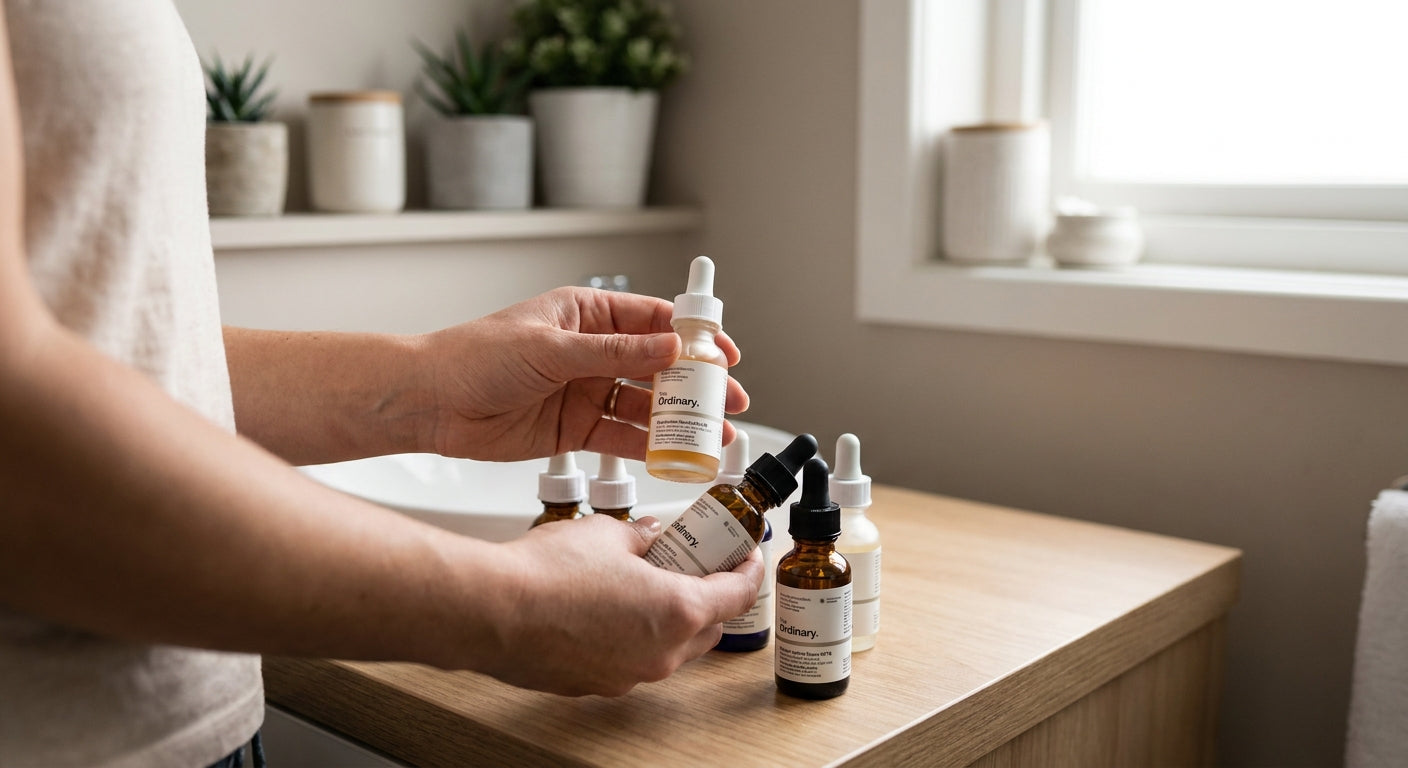
Picking a face serum without knowing your skin type doesn't require a dermatologist visit or a 20-question quiz. It requires watching your skin for a few days and matching what you see to what a specific ingredient actually does.
- How to choose a face serum: match ingredients to what your skin does at midday, not a guessed label.
- Vitamin C Glow Serum targets dullness and uneven tone - check for that before assuming you need oil control.
- Hydrating Serum works for oily and dry skin alike - hyaluronic acid adds water, it doesn't control oil.
- Patch test 48 hours before any new active touches your whole face - irritation shows up fast.
- Read the full INCI list before buying - it beats any skin-type category printed on a bottle.
Why this matters
Most men never get told their actual skin type. They get handed a marketing category - oily, combination, sensitive - that shifts with the season, the shower temperature, and whether they shaved that morning. A serum picked off a guessed label is a coin flip.
A serum picked off what your skin is doing this week works more often, and it costs nothing extra to check first. Serums run more concentrated than a cleanser or moisturizer, so a bad match shows up fast - sometimes within 48 hours, which is exactly why the steps below start with observation, not shopping. If you want the full routine context before picking one product in isolation, a simple skincare routine for men who hate fuss is worth reading alongside this.
What you'll need
- A clean, dry face with nothing applied for at least 30 minutes
- Good daylight or a bathroom mirror with a strong bulb - fluorescent light hides shine
- A tissue or blotting paper (faster and more accurate than eyeballing it)
- A notes app or notebook to log what you see over 5-7 days
- One new serum at a time - not a bundle, not three actives stacked in week one
- Two weeks of patience before judging whether it's working
The steps
1. Wash your face and wait 30 minutes before you assess anything
This gives you a clean baseline instead of a reading skewed by leftover product or a hot shower. Residual oil, steam, and heat all make skin look shinier and feel oilier than it actually is between showers.
Wash with lukewarm water, pat dry, then don't touch your face for 30 minutes. Expected outcome: skin returns to its resting state, which is the only state worth judging. Common mistake: checking your skin type right after a hot shower - it reads oilier every single time.
2. Map where the shine actually shows up
This replaces a guessed label with an actual observation. A lot of men call themselves "oily" when it's only the T-zone, and "dry" when it's really just their cheeks in a cold month.
Press a clean tissue against your forehead, nose, and each cheek separately at the 30-minute mark. Oil transfers unevenly for most people. Outcome: you'll know if it's overall shine, T-zone only, or barely anything. Common mistake: checking once, on one day - skin behavior shifts with the season, and a January check skews dry for almost everyone.
3. Match the behavior to a job, not a category
This is the actual answer to how to choose a face serum: pick the mechanism, not the marketing label. "Oily skin serum" is a shelf category. Oil control, hydration, and brightening are jobs an ingredient list actually does.
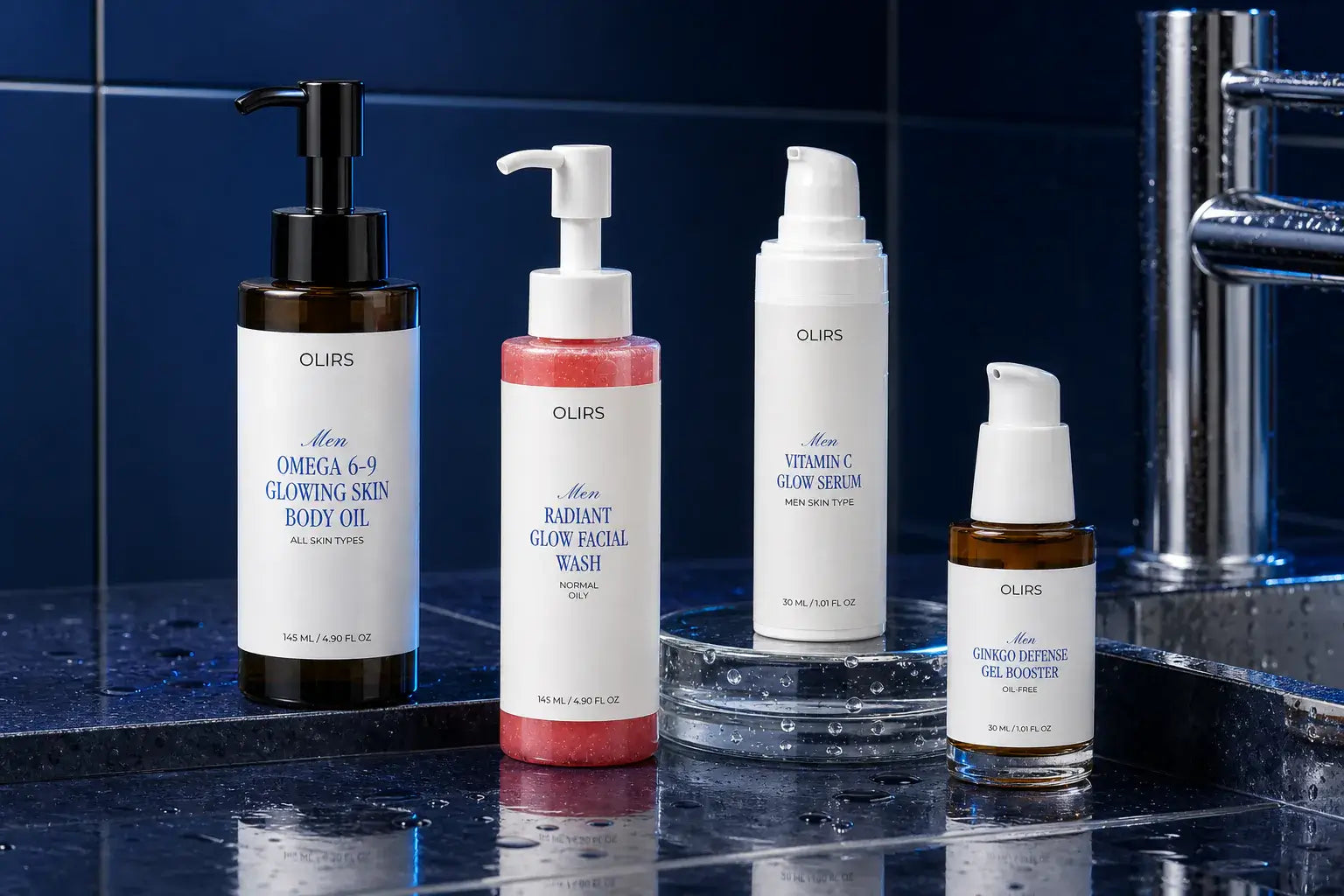
Dullness and uneven tone point toward a vitamin C formula - Vitamin C Glow Serum uses stabilised vitamin C with ferulic acid for that job. Tightness, flaking, or a tight feeling after washing points toward hyaluronic acid instead - Hydrating Serum is built around that mechanism and works whether your T-zone runs oily or not, because hydration and oil control aren't the same axis. Outcome: you narrow 26 products down to one or two realistic options. Common mistake: picking based on packaging or price instead of the active ingredient actually doing the work.
4. Patch test for 48 hours before it touches your whole face
This catches a reaction before it's on the part of your body people actually look at. Serums are more concentrated than a cleanser, and OLIRS formulas hold COSMOS NATURAL certification, which means a third party audited the ingredients and how they were extracted - it doesn't mean every ingredient is inert on every face.
Apply a coin-sized amount to the inside of your forearm or behind your ear, twice daily, for 48 hours. Outcome: no redness, itching, or bumps means it's clear for the face. Common mistake: skipping this step because the ingredient list "looks natural." Natural and non-reactive are two different claims.
5. Introduce one active at a time, two weeks apart
This isolates what's actually working or actually causing a problem. Stack a new vitamin C serum and a new exfoliant in the same week and you won't know which one did what if your skin reacts.
Run the new serum alone for 14 days before adding anything else new to the routine. Outcome: a clean read on what one product is doing for your skin. Common mistake: building a five-step routine on day one because a chart online looked complete.
6. Track mornings and evenings for two weeks, not two days
This produces real data instead of a first-impression guess. Some actives - retinol alternatives like bakuchiol, or AHAs - cause mild dryness in week one that settles by week three.
Note shine level, tightness, and any redness each morning before washing. Outcome: a visible pattern by day 14 - improving, flat, or worse. Common mistake: quitting on day four because the serum "did nothing" or "made it worse," when both are normal in the first week.
7. Adjust frequency before you decide a product failed
This fine-tunes usage before you write off something that just needed a lighter schedule. Exfoliating actives don't need daily use - the Overnight AHA Exfoliating Serum is built around 2-3 nights a week, not seven.
If skin feels tight or looks flaky, drop to every other night before dropping the product entirely. Outcome: most irritation from an active resolves with a frequency change, not a product swap. Common mistake: assuming irritation always means "wrong product" instead of "wrong frequency."


Troubleshooting
- Stinging within seconds of application. Likely a fragrance or a higher-concentration active than your skin is used to. Stop, patch test again on the forearm, and check where the active sits on the INCI list - ingredients near the top mean a higher concentration.
- No visible change after two weeks. Two weeks is early for firmness claims. Give a peptide serum 4-6 weeks; vitamin C tends to show brightening faster, closer to 2-3 weeks.
- New breakouts after starting a serum. Could be purging, which resolves in 2-4 weeks, or a genuine reaction to an oil-heavy formula on skin that already runs oily. Still active at week four means it's not purging.
- Serum pills or balls up under moisturizer. Usually a layering order problem, not a product problem. Apply thinnest to thickest and wait 60 seconds between the serum and the next step.
- Tightness by midday despite a hydrating serum. Hyaluronic acid pulls water from the air, and in a dry climate or a heated office it can pull water from deeper skin layers instead if nothing seals it in. Follow with a moisturizer - don't skip that step.
- Redness after starting an exfoliating serum. Drop from nightly to every third night, and confirm nothing else in the routine has an acid stacked on top of it.
Tools and resources
- The INCI list on the product page - read it before you buy, not after you react
- A patch-test spot: inside forearm or behind the ear
- Vitamin C Glow Serum for dullness and uneven tone
- Hydrating Serum for tightness or flaking, regardless of oil level
- Overnight AHA Exfoliating Serum for texture, used 2-3 nights a week
- Peptide Firm-Look Serum for firmness once your base routine is settled
What to do next
Once you've matched a serum to an actual observation instead of a guessed label, the next decision is sequencing - what goes on before it, and what seals it in after. That's a separate problem from picking the serum itself, and it's worth solving before you add a second active.
FAQ
What's the best face serum if I don't know my skin type?
Match the ingredient to what you observe, not a guessed category. Dullness and uneven tone point to a vitamin C serum; tightness or flaking points to a hyaluronic acid serum like Hydrating Serum - both work regardless of whether you'd call yourself oily.
How do I tell if my skin is oily or just dehydrated?
Oily skin shows shine on a tissue press 30 minutes after washing with nothing applied. Dehydrated skin feels tight or looks flaky even when it's shiny - oil and water content are separate things, and a lot of men have both at once.
Is vitamin C serum better than hyaluronic acid serum?
Neither is better - they do different jobs. Vitamin C targets brightness and uneven tone; hyaluronic acid targets hydration. Most routines eventually use both, just not on day one.
How much does a face serum cost in 2026?
In the OLIRS catalog, serums run from about €26 for Hydrating Serum up to €42.40 for a peptide formula in 2026. Price generally tracks the number and concentration of actives, not the brand.
Can I use a face serum every day?
Hydrating and vitamin C serums are generally fine daily. Exfoliating serums with AHA are not - 2-3 nights a week is the realistic frequency, and daily use is the most common cause of irritation complaints.
Do I still need a moisturizer if I'm using a serum?
Yes. A serum delivers a concentrated active; a moisturizer seals in water and reduces moisture loss through the day. Hyaluronic acid especially needs something on top of it to work properly.
How long before a face serum shows results?
Brightening from vitamin C often shows in 2-3 weeks. Firmness from peptides needs 4-6 weeks. Judging any serum before two weeks is judging it too early.
What does COSMOS NATURAL certification mean on a serum label?
It means a third party audited every ingredient and how it was extracted before the product could carry the mark. It's a certification about sourcing and process, not a guarantee against irritation on every skin.
One last thing
Most "combination skin" complaints aren't combination skin at all - they're an unmoisturized T-zone sitting next to over-moisturized cheeks because the same amount of cream got applied everywhere on the face. Fix the application pattern first. It's free, it takes one extra minute in front of the mirror, and it solves what a lot of men try to fix by buying a second serum in 2026 they didn't need.